An instrument for the sky
weather, worth reading.
The only weather app that grades its own homework. Editorial briefs. Sunset predictions. Outfit intelligence.
Who Vesper is for
a weather app for people who read the weather app before they drink coffee.
The average person checks a weather app three to five times a day for four seconds at a time and retains almost nothing. Vesper is built for the smaller audience who wants to actually read their forecast — the people who want one good sentence, not twelve cells of numbers.
The commuter
You open a weather app three times before noon. You want the sentence that tells you whether the jacket you grabbed was right. You do not want a grid of cells.
The parent
You are deciding in sixty seconds whether the park is realistic. You need one informed voice that knows the difference between an eighty percent chance of rain after five and the kind that starts before ten.
The photographer
You are watching the sky for the conditions that produce a specific kind of light. You want the forecast to tell you when the light is going to be worth leaving the house for.
The outdoor worker
You need to know what the body feels, not what the air measures. A dew point climbing through the afternoon tells you more than the temperature and the wind combined.
This morning’s brief
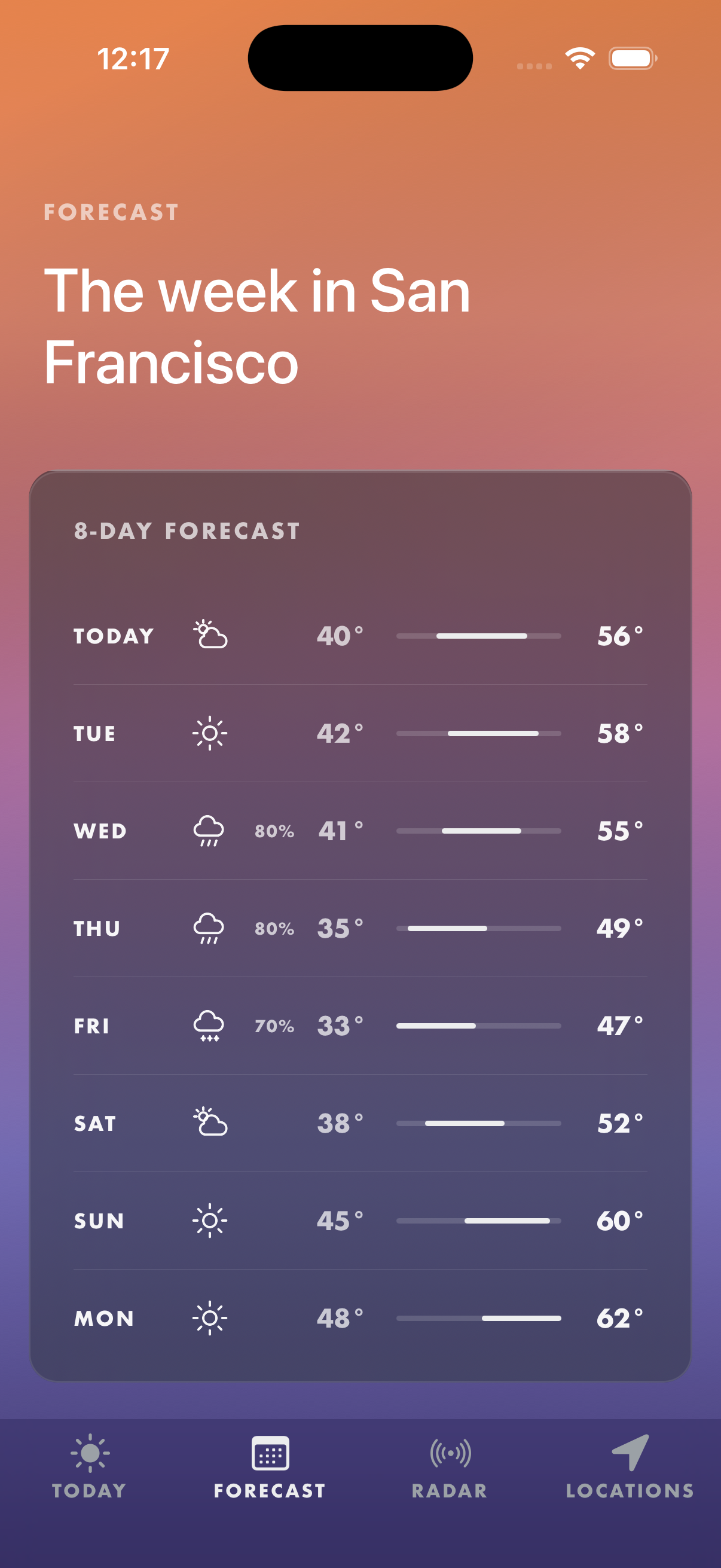
“A high-pressure ridge slid in overnight. Thin cirrus by mid-afternoon, the kind that makes the light go gold instead of gray. No coat needed, but wear the one you like.”
— Vesper, San Francisco · Tuesday
The editorial method
the five signals that make weather editorial.
Every weather app has access to the same atmospheric data. What Vesper does differently is read that data looking for which of these five signals is the dominant story of the day. One of them usually is. The writer picks that signal and writes the brief around it. Everything else is cut.
Pressure change
A falling barometer is a weather story. So is a rising one. The difference between a stable pressure and one that has dropped ten hectopascals in six hours is the difference between a quiet day and an approaching front.
Cloud base altitude
A deck of stratus at 500 feet is a claustrophobic morning that will not lift until afternoon. A deck at 12,000 feet is a scattered-sun day with dramatic light. Both read as "cloudy" on a template forecast. Neither is what the reader needs to know.
Wind direction shift
A shift from northwest to southeast in the afternoon is often the difference between a cold morning and a warm evening, or between a dry morning and a humid one. Template apps show average direction. Editorial writers watch for the pivot.
Humidity and dew point gap
The gap between temperature and dew point is the truest predictor of how the air will feel. A 75 degree day with a 68 degree dew point is oppressive. A 75 degree day with a 45 degree dew point is perfect. The gap is the story.
Light quality forecast
What the sky is about to look like in the evening is its own forecast. Cloud type, altitude, humidity, visibility, and sun angle combine into a prediction of how the light will behave at golden hour. Most weather apps do not even try.
What you’ll see
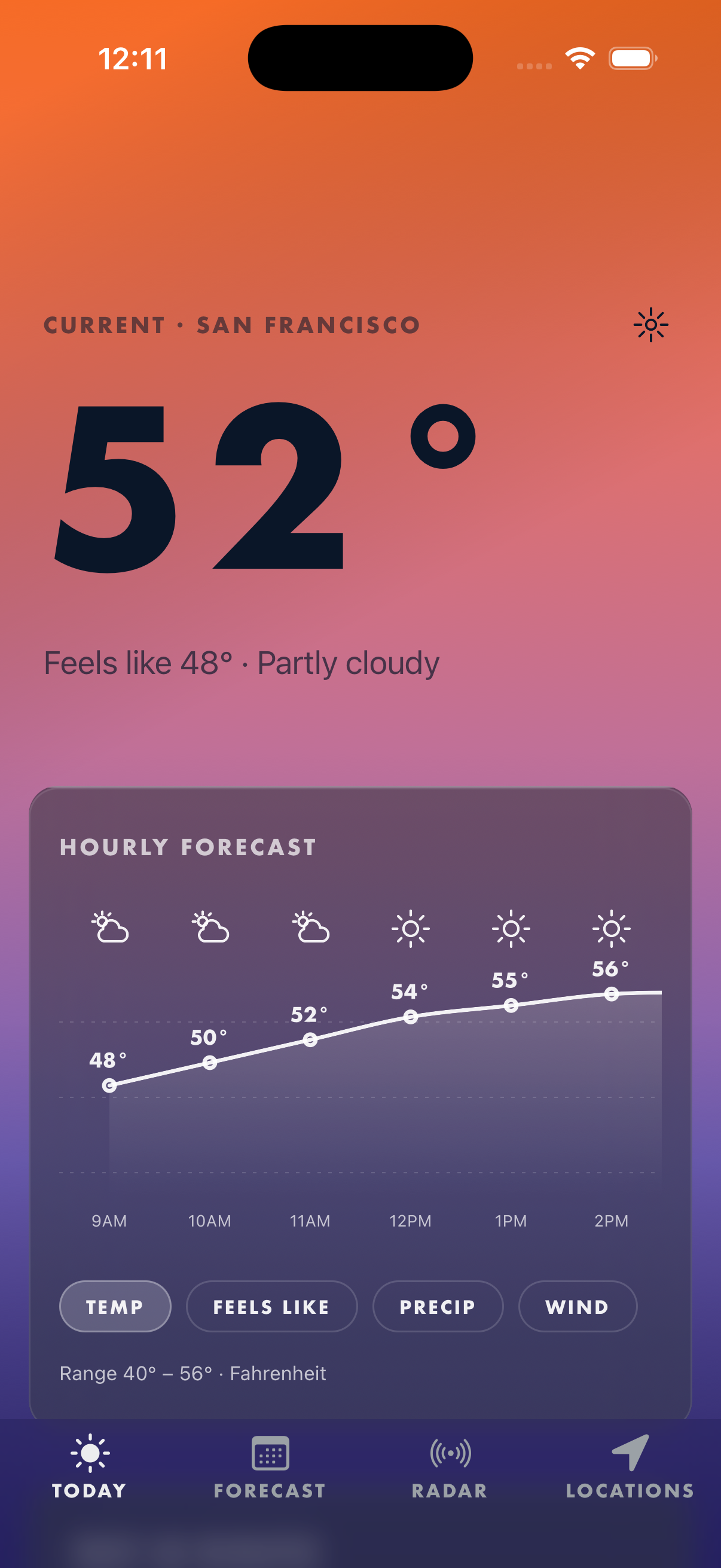
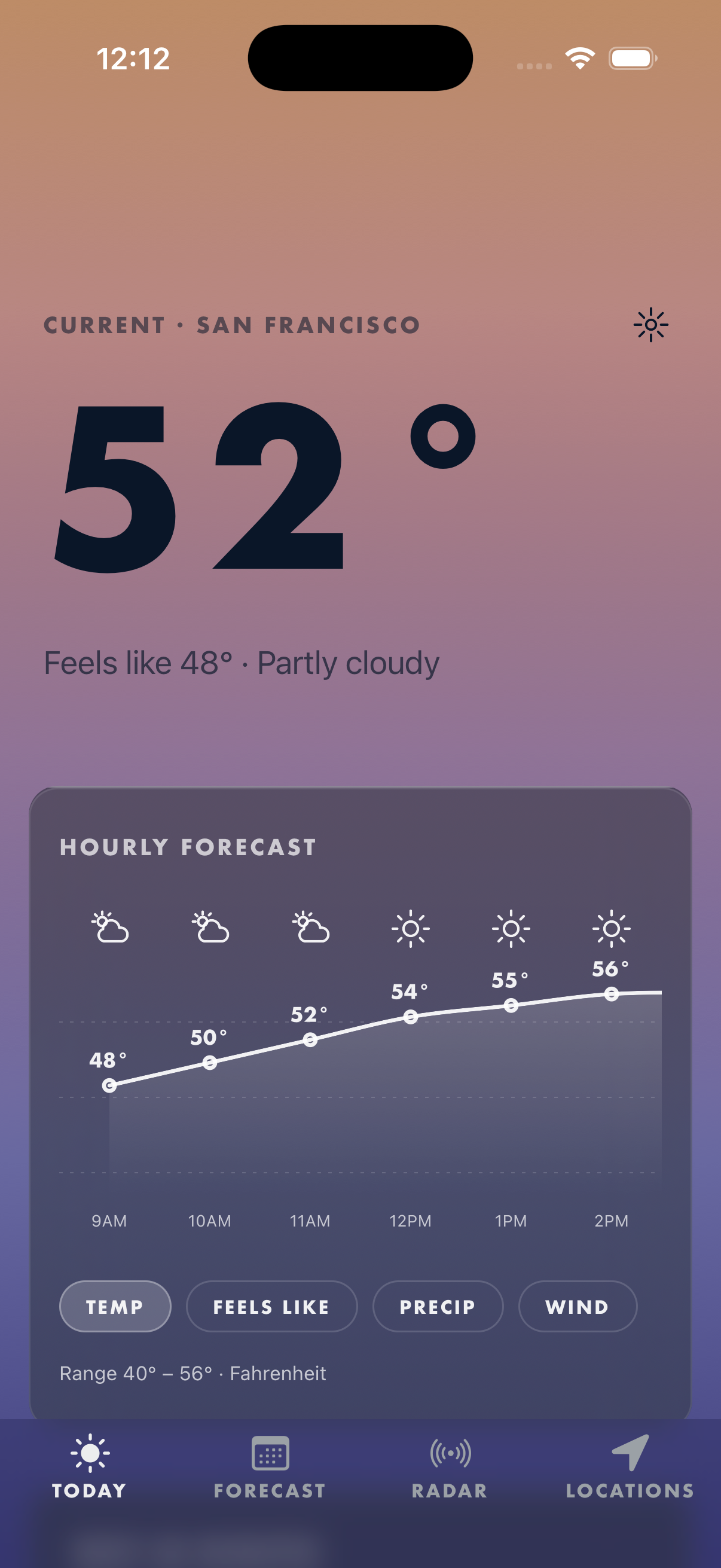
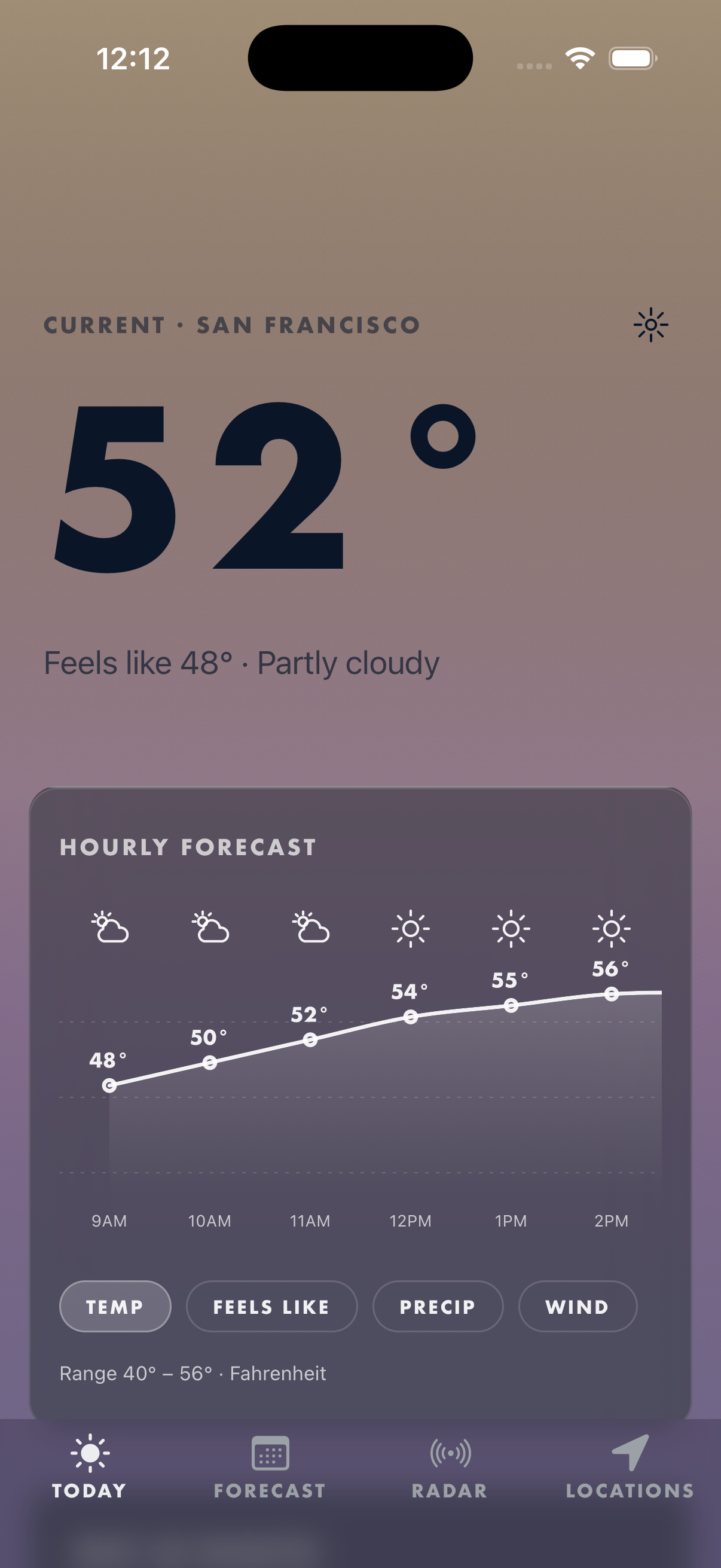
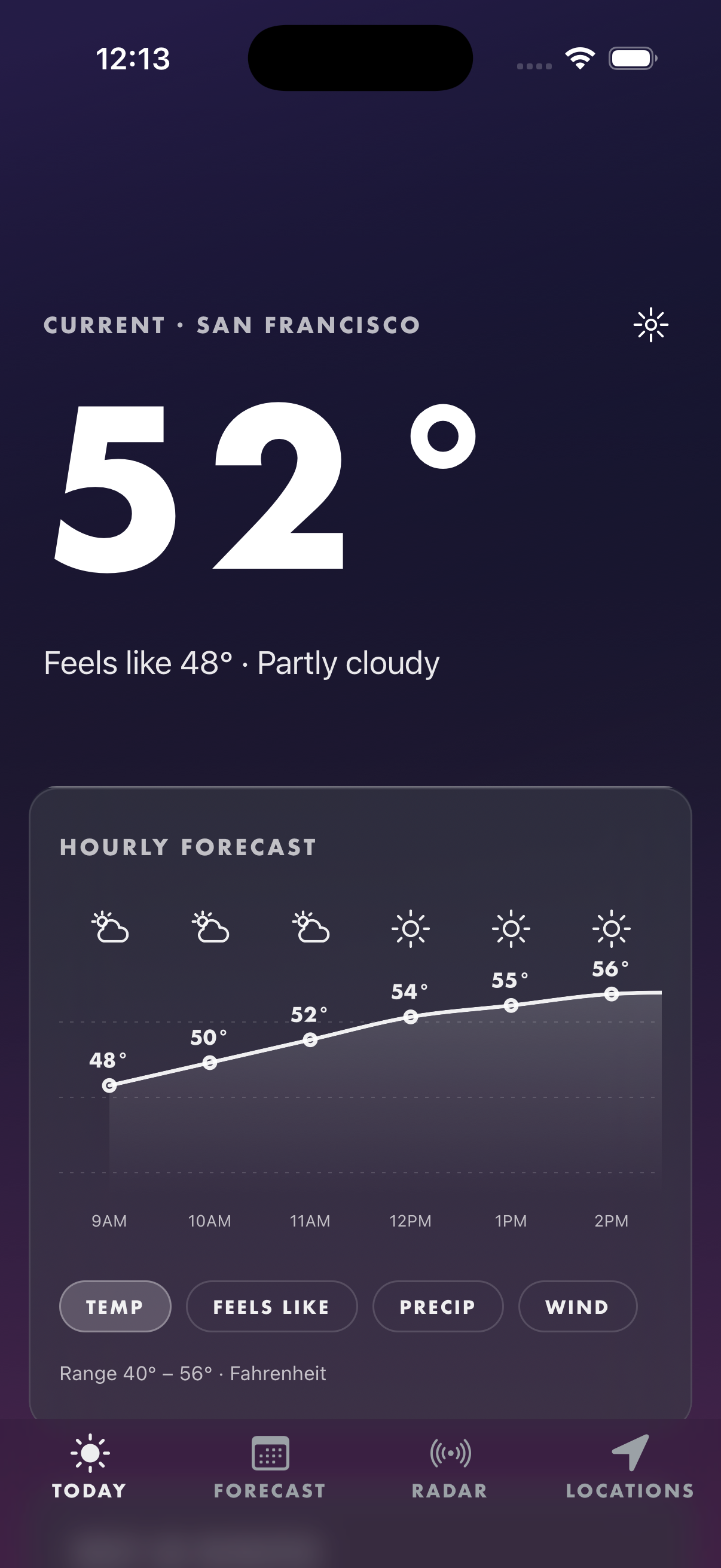
a day in vesper.
“The fog’s burned off clean—bare sky, direct light on your skin. Crisp. Wind-scrubbed air. No coat needed, but wear the one you like.”
Sunset Verify
we’ll tell you if we were right.
Predicted 73/100. You rated 8/10. 93% match. Every evening, Vesper publicly grades its own sunset forecast — the only weather app with the stomach to do that.
HOW DOES IT FEEL?
Biometric Weather Signal
your body already knows.

Blizzard
18°F
Your body shivers before your mind decides it’s cold. The core trembles — a pulse you feel before you think.

Perfect Equilibrium
72°F
The rarest state. Low wind, low UV, no rain. The body barely breathes. Solar gold — a reward for the calm.

Extreme Heat
105°F
Heat radiates outward. The aura expands past the silhouette — a warning you see the way your skin feels.
Weather, translated to the body.
Most weather apps give you a number. Vesper gives you a signal — a glow inside a mannequin that changes color, speed, and intensity based on how the air actually feels on your skin.
The system reads temperature, wind, UV, and precipitation, then scores them against how your body responds. Cold makes the pulse tremble. Heat makes it radiate. Perfect conditions earn a rare golden calm that means: go outside.
You don’t read the mannequin. You glance at it and know.
Native polish
live activities, widgets, watch.
Live Activities
Sunset countdown on your lock screen and Dynamic Island.
Widgets
At-a-glance forecasts on your home screen.
Watch
Complications and a dedicated watchOS app.
Journal
A personal record of every sunset you verify.
The constraint
“weather, worth reading” is a design principle, not a slogan.
Every feature on this page had to pass a single test before it shipped: does this make the forecast more worth reading, or does it just add another chart to a screen nobody looks at? That test has killed more features than it has approved, and the ones that made it through are the ones you see.
Live Activities exist because a glanceable brief on the lock screen is worth reading at a glance. Widgets exist because a brief in the home screen corner is worth reading in passing. Sunset Verify exists because a brief that is honest about its own accuracy is worth reading more than a brief that pretends to be infallible.
The features that did not make it were rejected on the same basis. Radar maps are not a brief. Multiple data source toggles are not a brief. Push notifications for every temperature change are not a brief. They are charts and configuration, which is the opposite of editorial discipline.
The discipline is the point, and the discipline is what makes Vesper a different category of weather app rather than a different skin on the same template. See everything the app can do, or read the full argument for editorial weather.
What is Vesper?
Vesper is an editorial weather app that replaces generic template forecasts with short, opinionated daily briefs written in an authorial voice. It is the first weather app to publicly verify its own sunset predictions through a feature called Sunset Verify. Available as a free download on iOS and Android.
Frequently Asked Questions
What makes Vesper different from other weather apps?
Vesper replaces template-driven forecasts with short editorial briefs written in an authorial voice, and publicly grades its own sunset predictions through Sunset Verify. Every other weather app on the market generates its text by filling variables into a template. Vesper writes each forecast as original prose with a point of view about the day.
Is Vesper free?
Vesper is free to download with core weather features. Premium features and pricing will be announced at launch.
What is Sunset Verify?
Sunset Verify is Vesper's signature feature that predicts sunset quality each day from live atmospheric data and lets users verify the prediction with a photo, building a personal accuracy track record over time.
When will Vesper be available?
Vesper is currently in beta. Join the waitlist at getvesper.io/beta to get early access and be notified when the app launches on iOS and Android.
What does it mean for a weather app to be editorial?
An editorial weather app applies a point of view to the same atmospheric data every other app has. Instead of showing you a grid of numbers, it writes a short brief — two or three sentences with intent — about what the day is going to feel like and what you should probably do about it. The data is identical. The voice is the product.
How does Vesper write a brief if it is not a human writer?
Vesper's briefs are generated by a language model operating under an editorial style guide written by people and refined through thousands of examples. The style guide, cut discipline, and voice rules are the content. The model is the mechanism. Template weather apps are generated by models that were never given an editorial style guide, which is why they all sound identical.
Does Vesper have radar maps or severe weather alerts?
Vesper does not ship radar maps or a proprietary severe weather alert system. Severe weather alerts come through the operating system, which is the right place for them. Radar was rejected because a radar map is not a brief and would not make the forecast more worth reading. We respect both as product decisions. We are doing something different.
Get Vesper
the first sky, on us.
Join the waitlist and we’ll send your first Vesper Brief the morning the app goes live.